For an incoming tour operator, the math has always been brutal. A typical bespoke itinerary takes four to six hours to research, compile, and price by hand. A skilled inbound agent can produce maybe four or five quality proposals a day. During shoulder season that's manageable. In peak inbound months — when one experienced agent is sitting on 60 to 100 active inquiries at once — it's mathematically impossible to give every traveller a fast, well-built response.
Most operators end up with the same triage: respond fast to the obvious wins, slow to the maybes, and not at all to the long-shots. Conversion stays mediocre because the maybes — the bulk of the pipeline — get the worst treatment.
That triage is exactly what AI is dismantling. In this article we'll walk through how incoming tour operators and Destination Management Companies (DMCs) are using agentic AI — specifically Atlon — to multiply their proposal capacity without hiring more people, and what changes operationally when they do.
The bottleneck has never been the trip itself
The interesting observation is that the trip itself is rarely the slow part. An experienced inbound agent looks at a request — "10 people, family with two teens, Greek islands, mid-July, around €1,500 per person, one of them is vegan, want to see a sunset in Santorini" — and within a few minutes already has a strong mental sketch of the right itinerary.
The slow part is everything that comes after the sketch:
- Querying ten different supplier portals for availability on those dates.
- Finding the right hotel category at the right price for the group.
- Pricing transfers between islands, factoring in ferry schedules.
- Cross-checking restaurant options for the vegan family member.
- Building a clean, branded PDF with day-by-day descriptions and images.
- Writing the cover email.
- And then doing it 60 more times this week.
The expertise is in the sketch. The hours are in the assembly. AI is built to handle assembly.
What an AI-augmented inbound desk looks like
In an Atlon-equipped operation, the inbound flow looks like this:
- The inquiry email lands. Atlon detects it as travel-related and parses the structured data automatically — dates, destinations, traveller counts, budget signal, special requirements, language preferences.
- The AI runs supplier searches in parallel and proposes a draft itinerary with options at different price points.
- The agent — the expert — opens the draft. They keep what's right, swap what isn't, write a personalised note, and send.
What used to be four to six hours is now twenty to thirty minutes. And critically, the agent is operating at the top of their licence: they're making the judgment calls that win deals, not formatting tables in PDFs.
Where the 10× actually comes from
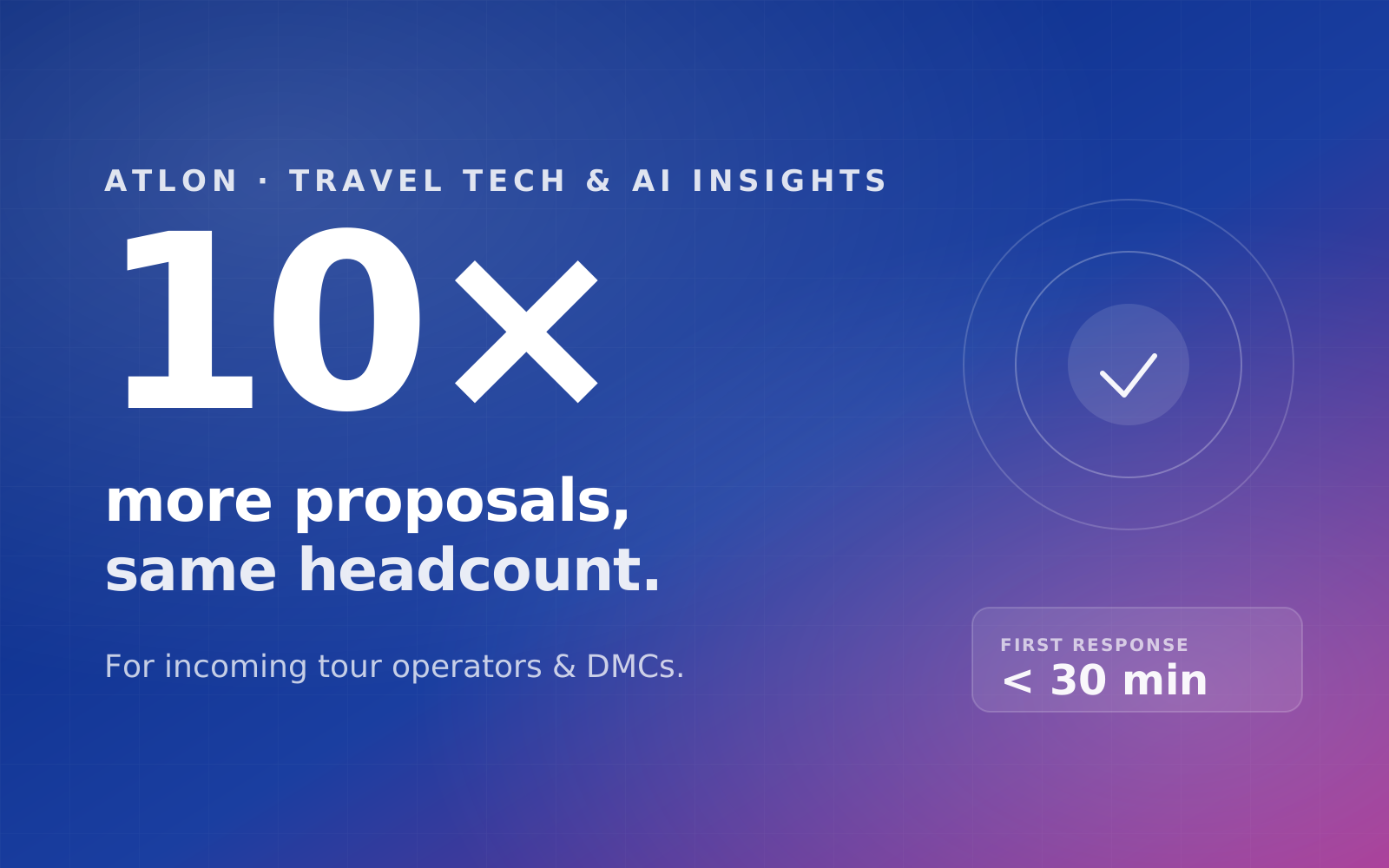
The "10× more proposals" headline isn't marketing maths. It compounds three things:
- Time per proposal drops by 80–95%. A four-hour task becomes a 20-minute review.
- No more triage. When proposals are this cheap to produce, you respond to every legitimate inquiry — the maybes get the same treatment as the obvious wins.
- First-response time collapses. Conversion data is consistent across the industry: travellers who get a polished response within an hour convert dramatically better than those who wait a day.
Multiplied together, an operator who was previously sending 20 proposals a week can comfortably send 200, with the same headcount.
What you don't lose
There's a real fear in the industry that AI-built proposals will feel generic and that quality will drop. In practice, the opposite tends to happen.
- Personalisation improves, because the agent isn't fatigued from formatting and has more energy for the human touches that matter — referencing the family's anniversary, the vegan dietary need, the request for "somewhere quiet to work for a few hours".
- Errors drop, because pricing, availability, and supplier data come from live integrations rather than copy-paste from email chains.
- Brand consistency improves, because every proposal goes out through the same templating system rather than being rebuilt from a Word doc.
- Knowledge captures itself. As the team uses Atlon, the system learns which suppliers, room categories, and itinerary patterns convert best for which traveller profiles.
The agent gets faster and better. That's why early adopters in this category are not slowing down once AI is in place — they're hiring more sales people, because the proposal bottleneck no longer caps how many leads they can profitably pursue.
Operational changes you should plan for
Three things tend to surprise operators in the first month with Atlon:
- The supplier conversation changes. When you're sending 5–10× more proposals, your suppliers see your volume go up. Be ready for renegotiated commission terms, faster contract turnaround, and access to inventory you previously didn't qualify for.
- The CRM gets honest. When proposals are cheap, every lead gets a full proposal — which means your pipeline reporting starts reflecting reality. Conversion percentages may drop on paper while absolute conversions go up.
- Your team's role shifts. Junior agents become supervisors of AI output rather than typists. The skills that matter are taste, supplier relationships, and judgment — not data entry.
Plan for the change, and the change is straightforwardly positive. Resist it, and the system underperforms.
How to evaluate Atlon for your operation
The honest test is to give the system a representative sample of your real inquiries — not curated demo emails, the actual messy inbox — and see how the proposals come back. We typically run a free-of-charge pilot with 20 to 50 real emails for any incoming operator that wants to evaluate.
If you'd like to run that test on your own inbox, contact us and we'll set up a pilot. You can also explore the product directly at atlon.gr, or read our introduction to Atlon for a higher-level overview.