Travellers don't always need more options. They need a clearer way to understand where they're starting from, where they're going, and which option actually fits their trip. That's the job interactive maps do — and it's the job most travel booking websites still don't do well.
For someone living in a country, knowing which port or which airport to search from is usually obvious. For a visitor it isn't. Knowing you'll leave from Athens doesn't tell you whether your sailing to Andros, Aegina or Kythnos goes from Piraeus, Rafina or Lavrio. The same problem hits a visitor in Italy who wants to travel from the Rome area to Barcelona, Porto Torres or Elba — there are several ports near Rome, and only one of them is the right one for the route they have in mind.
Boötes interactive maps let the user orient themselves, choose, and compare. Removing that friction stops being a usability fix and becomes a competitive advantage for the travel business that gets it right.
Why interactive maps matter in travel booking
Search-form-only booking flows quietly assume the traveller already knows the answer. They ask for a port, an airport, a city, a hotel name. Visitors and first-time travellers rarely do. Three things go wrong as a result:
- Bookings are abandoned when the traveller can't tell which port serves their destination.
- Wrong tickets are issued when the traveller picks the closest-sounding port without confirming it actually sails the route.
- Conversion suffers on mobile, where dropdown menus full of unfamiliar place names are the worst possible UI.
A map answers all three at once. It turns an unfamiliar list into a recognisable picture: I'm here, my destination is there, and here are the points that connect them.
From a port near Rome…
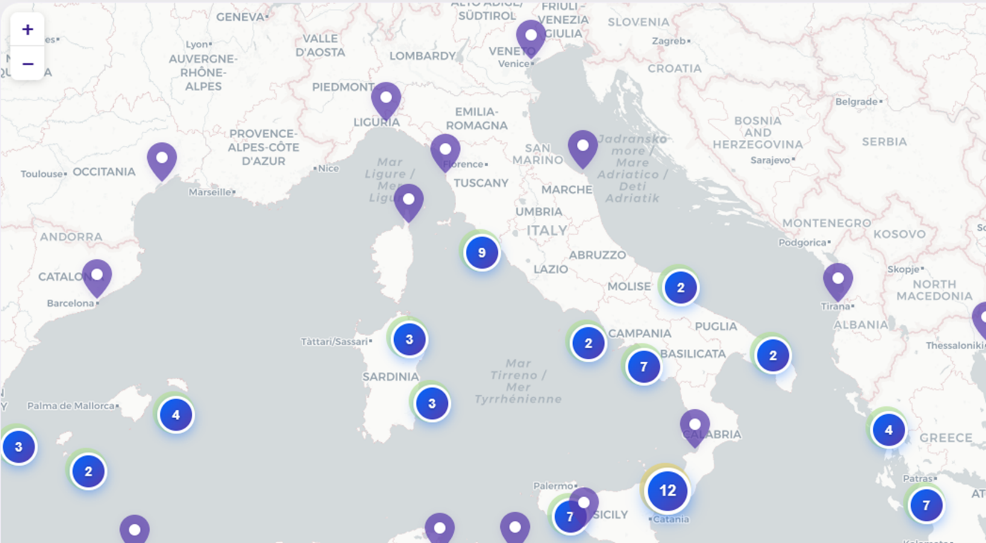
The traveller starts from the wider Rome area and doesn't need to know in advance which port serves their route.
Finding Civitavecchia
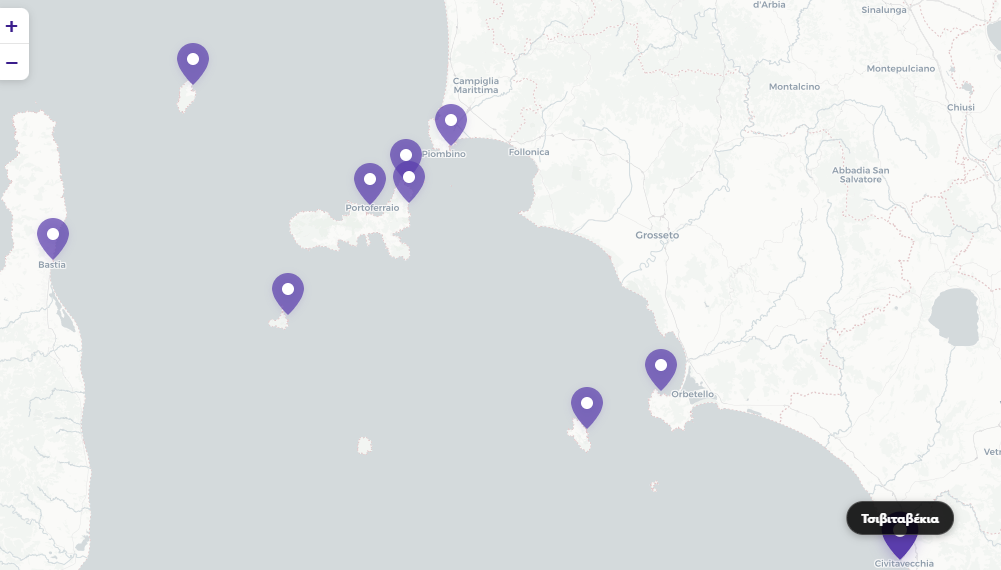
The map helps locate the right port and removes the uncertainty most search forms create.
From there, every destination at a glance
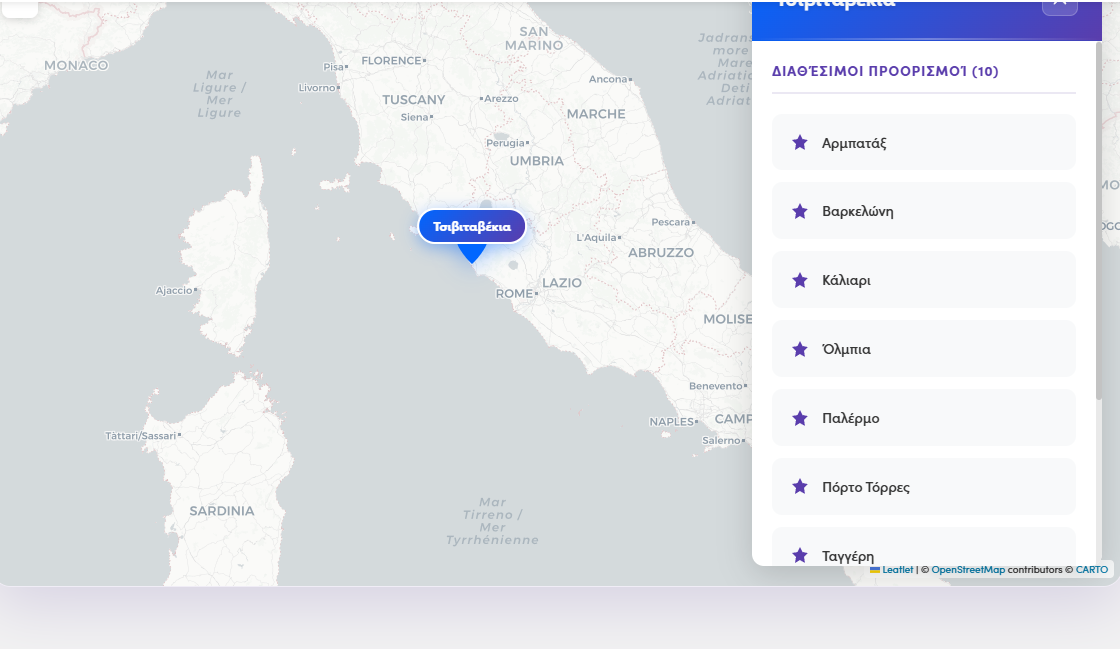
The traveller sees every available destination and can compare options in a way that simply isn't possible with a dropdown.
And the route to Barcelona is ready to book
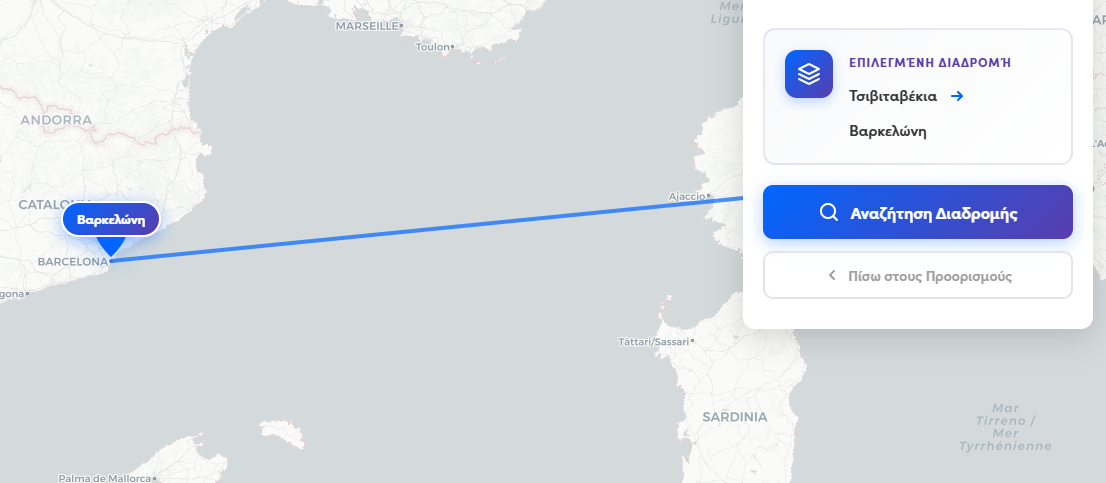
The route becomes visually obvious before the user commits to selection and checkout.
The same logic, every other travel service
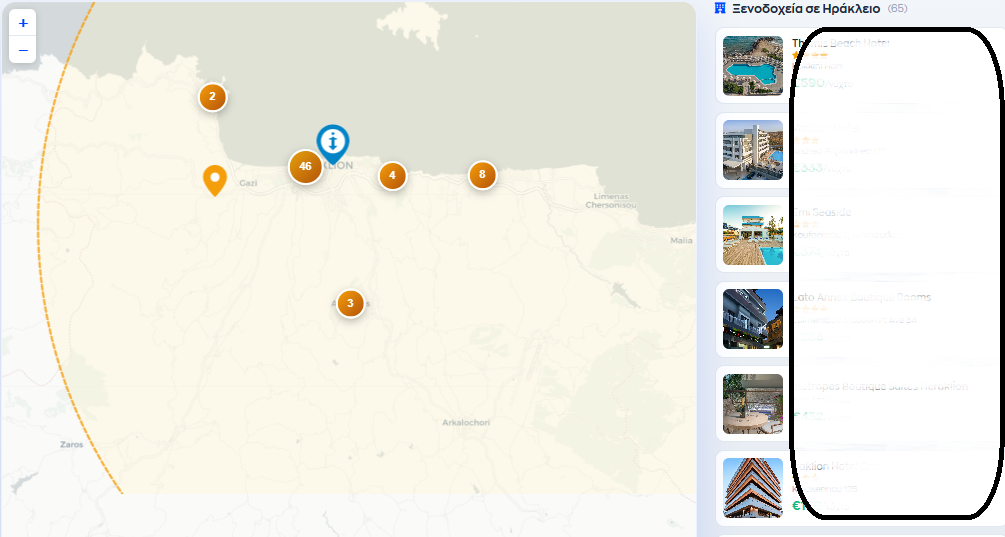
The same experience extends to hotels, excursions, pickup points and any other travel service where orientation matters.
Where interactive maps replace a search form
The Boötes implementation is generic: anything that lives at a coordinate can live on the map. In production today that includes:
- Ferry routes — pick a city, see every port that serves it, then see every destination each port reaches.
- Hotels and accommodations — see exactly where a property sits relative to the harbour, the beach, or the city centre, with prices and ratings on the pin.
- Pickup and drop-off points for buses, transfers and rental cars — so the traveller picks the convenient one, not the cheapest-looking one that's a 40-minute drive from where they actually are.
- Excursions and activities — explore what's bookable in a destination by area instead of by name.
Why most travel websites still don't have this
Interactive maps are something travellers expect, and yet most travel businesses don't ship them. Two reasons usually come up:
- Design through the operator's eyes, not the traveller's. If you already know your inventory, you don't feel the gap a visitor feels. Maps only become obvious when the team designs the flow as if they were the traveller — first-time, foreign, on mobile, in a hurry.
- Implementation complexity. Plotting accurate coordinates across thousands of ports, hotels, and pickup points; keeping availability and pricing in sync with the booking engine; making the map fast on mobile; localising labels — none of it is a weekend job.
Boötes makes that work straightforward, whether it's ferry routes, the location of curated hotels, the boarding point for a bus, or any other travel service that needs better orientation and a clearer choice. The map plugs into the same booking engine that powers search, pricing, and checkout — so what the traveller sees on the map is exactly what they can book.
What this means for travel operators
For a ferry company, a tour operator, a DMC, or a travel agency, the impact is operational, not cosmetic:
- Higher conversion, because travellers stop bouncing off ambiguous port and city names.
- Fewer wrong-port bookings, which means fewer refund requests and fewer angry calls during peak season.
- Better mobile performance, where maps outperform long dropdowns by a wide margin.
- A discovery surface for upsell — once the traveller is exploring the map, you can show alternative routes, nearby hotels, or add-on activities they didn't know existed.
See it on your own inventory
The interactive maps shown here are live in Boötes, our travel booking platform, and adapt to whatever inventory a customer plugs in — ferries, hotels, transfers, or activities. If you'd like to see how an interactive map would look on your own routes or destinations, talk to us or visit bootes.gr for the full product tour.